
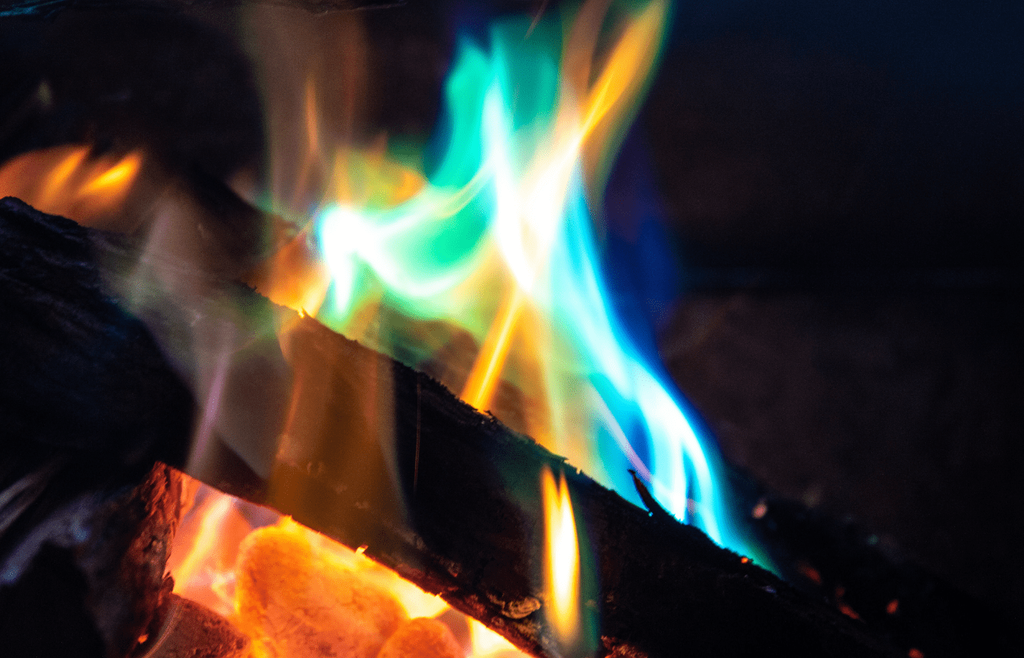
Whether you are out camping or you simply want to have a wonderfully relaxing natural wood fireplace at home it is important to know which are the best types of wood to use and which to avoid.
Here we will detail the problems with colors when the wood is burning. Flames can appear in a multitude of colors and can be caused by many different things. Some colors are perfectly fine whereas others can indicate that there is something wrong and that you may be in danger.
Wood that burns blue usually means it has a hear of about 2300 degrees or hotter while a green flame may indicate that their is something extra burning with your firewood such as chemicals or pesticides.
What Does a Blue Flame Mean When Burning Wood?
Perhaps the easiest color change to notice in a flame is the color blue. This is because it is markedly different from the traditional and perhaps expected orange flame. As you may remember from science class a blue flame can simply indicate the intensity of the heat of the flame.
For example, the hottest part of the flame (against the match head itself) will burn a shade of blue whereas the rest of the flame will be the normal orange color.
If the entirety of the flame is significantly hot then the whole of the flame will burn blue, for example, a bunsen burner will typically be predominantly blue rather than orange when the gas volume is turned up.
But what does a blue flame mean when you are burning wood? Blue means that the carbon in the source is being completely burned. This means that all of the material (carbon) is burned, leaving no matter left for the flame to light up – this is why there is no orange color.
Typically, a blue flame indicates a heat of 2300-3000 degrees.
If your wood is burning with a blue flame then there can be a number of reasons for this. One simple thing may be that there are a number of old and rusted nails in the wood, the oxidation in the iron can cause this blue color, meaning that the color is not actually a result of the wood itself.
However, if you know that the wood was free of any iron pins or nails then the issue may be how the wood was treated. Older pressure-treated lumber typically contains copper compounds, causing this blue color. If you are using scrap wood for your firewood then this may well be the case.
If you know where your firewood came from then the color may simply be a matter of the type of wood that you have chosen to burn. For example, American elm wood burns blue when it is dry. Black locust (if it is aged) and white elm are also capable of producing a blue flame.
Is Blue Fire Dangerous?
If you are simply burning firewood that is producing a blue flame then the good news is that no, it is not dangerous. It simply means that no fuel is going to waste as the carbon is being used in its entirety.
However, if you are using the wood with an appliance it is advisable to get a carbon monoxide detector to ensure that your appliance will not malfunction and that the blue flame is not a result of excessive carbon monoxide.
Why Is My Firewood Burning Green?

Another color that may come as a surprise if you were expecting the traditional orange-colored flame is green.
Just as with a blue flame, there are several factors that can cause your flame to burn green. Just as before it is important to know why your flame is green in color as this may indicate a serious problem or it can simply be a result of the type of wood that you are burning. Either way, it is best to be sure.
Everybody should have an emergency fire starter kit in their arsenal. This 5-in-1 fire starter kit by Swiss Safe will start a fire instantly. You will get over 15,000 strikes as well as a built in compass, whistle, and a steel scraper.
A few of the types of wood that can cause a green flame when burned are:
- Cedar
- Woods with foxfire on them (typically found on decaying woods)
- Woods treated with pesticides
Unlike a blue flame, green flames do not simply indicate the heat of the flame, but actually require something external to cause the change in color from the usual orange flame.
Normally, the presence of a green flame means that something extra to your firewood is burning. If you have collected scrap wood or wood from other places then it may well be the case that your wood has been treated with a pesticide.
These pesticides often contain borax which will burn a bright green color when ignited. So, if this is the case it is not actually your wood itself that is giving off the green color, but the layer of pesticide that it is coated in!
Another option for a green flame is the presence of copper. Again, if you do not know the exact source of your wood there is a good chance that it may have copper residue or small pieces of copper inside the wood. This would then explain why there is a bright green flame when you set the wood on fire.
Again, it is not the wood itself that is burning green, but other things on or within the wood.
Is Green Flame Dangerous?
A green flame is not an imminent threat, but it is not recommended to cook anything using this flame as depending on the amount of what is causing the green color that is being burned you can actually develop toxicity to the substance.
For example, if your firewood is burning green in color due to the presence of copper (a high presence at that) and you use this flame to openly cook a hotdog or marshmallow then you may be at risk of developing copper toxicity from this.
However, if you are simply using the fire as decoration, make sure that you are in a well-ventilated room or are outside to ensure that you are not breathing in anything harmful. This way there is no risk of developing any problems from the burning of a green flame.
Final Thoughts
Generally, blue or green flames are not something to worry about, especially if you know the reason behind the color. For example, if you know that your firewood is burning blue because of the type of wood that you are burning has a particularly high carbon content, or that your flame is green because you sprayed a borax-based pesticide on your trees earlier in the year, then you have nothing to worry about.
However, if you are unsure of the cause then it is better safe than sorry. Check your firewood for any added extras such as nails, pins, wires or residue. These can be the cause of the color change.
If your firewood is connected to a gas source and is burning blue then make sure to check the integrity of your appliance to ensure that there is no risk of carbon monoxide poisoning.